
What Is a Metal Carport? Do You Need One? Complete Guide
- legacycarports
- Jan 26
- 11 min read


If you’ve ever had to scrape ice off your windshield, rush to cover equipment before a storm, or watch the sun slowly fade your vehicle’s paint, you already understand the value of proper protection.
Metal carports provide a simple and affordable way to shield cars, RVs, boats, and equipment from the sun, rain, snow, and hail, without the expense or permanence of a traditional garage. They’re practical, versatile, and designed to fit a wide range of properties and needs.
For many homeowners, the garage ends up serving as a storage space long before it ever protects a vehicle. When that happens, cars are left exposed to the elements, and building a full garage can feel overwhelming or unnecessary. That’s where a metal carport makes sense, covered parking without the heavy investment.
A carport is a freestanding or attached outdoor structure designed to protect vehicles from harsh weather. Typically open-sided, it allows for easy access, better airflow, and flexible placement, while still providing dependable overhead coverage.
In this guide, we’ll walk through the different carport styles, sizing options, permit considerations, and pricing factors, so you can confidently decide whether a metal carport is the right fit for your property and your lifestyle.
What Is a Metal Carport?
A metal carport is a steel-framed structure topped with a metal roof, designed to protect vehicles, RVs, boats, and equipment from everyday exposure to the elements. Unlike temporary fabric covers, metal carports are built for long-term durability and dependable weather protection.
The main difference between a carport and a garage comes down to enclosure. Carports are typically open on the sides, which allows for better airflow, easier access, and a much lower overall cost than a fully enclosed garage. That open design also makes installation faster and more adaptable to different property layouts.
From a building-code perspective, carports are commonly defined as structures that are “open on not less than two sides,” a standard recognized by organizations such as ICC Digital Codes. This distinction often simplifies permitting and makes carports easier to approve than enclosed garages in many areas.
Metal carports can be installed in a variety of locations, including:
Driveways
Along the side of a house
Detached concrete or gravel pads
Farm and agricultural lots
Commercial or business parking areas
This versatility is one of the reasons metal carports are such a popular alternative to traditional garages.
Do You Need a Metal Carport?
Once you understand what a carport is, the real question becomes simple: Do you need protection from the elements? If the answer is yes, a carport may be the right solution for your property.
Leaving a vehicle exposed to the elements day after day adds up faster than most people realize. Constant sun and UV exposure can fade paint, crack trim, and wear down interior materials. Rain and snow bring moisture that encourages rust and corrosion, while hail or falling debris like tree branches can cause sudden, expensive damage. Even something as simple as shade can make a difference by keeping interiors cooler and slowing long-term wear.
Carports aren’t just about protection; they add real, everyday convenience. When placed along a driveway or near an entryway, a carport gives you a covered walk from your home to your vehicle, keeping you dry during rainstorms, shaded during extreme heat, and more comfortable year-round.
Choosing between a carport and a garage really comes down to how much enclosure you actually need. If your priority is affordable weather protection with easy access, a carport often does the job perfectly. A fully enclosed garage may make sense if you need secure storage, climate control, or a dedicated workspace, but it also comes with higher costs and longer construction timelines.
And for many homeowners, parking in the garage isn’t even an option. Studies cited by PR Newswire show that a large number of garages are so cluttered that they can’t fit a vehicle at all. In those cases, a carport becomes a practical, budget-friendly solution without the hassle of major construction.
Metal Carports Aren’t Just for Cars
Carports do more than protect vehicles; they’re incredibly versatile outdoor structures. Many homeowners use them to cover walkways and entry paths, creating a dry, shaded route between the house, driveway, or storage areas. Others turn carports into covered patios, making outdoor spaces more usable during heavy rain or intense sun.
They can also double as shaded play areas for kids, offering protection from direct sunlight while still allowing plenty of room to play. When storage space indoors is limited, carports provide a practical way to keep lawn equipment, tools, outdoor furniture, pool supplies, and other gear protected from the elements.
Carport Roof Styles (Choose the Right One for Your Weather)
Choosing the right carport roof style is essential for handling your local weather. Different designs perform better in rain, wind, snow, and heat, so this section breaks down common roof styles to help you choose the best option for your climate and needs:
Regular Roof
The regular roof is a traditional, rounded carport roof style designed for areas with mild weather conditions. It performs well in regions with light rain and limited snowfall, allowing water to shed efficiently without added structural complexity.
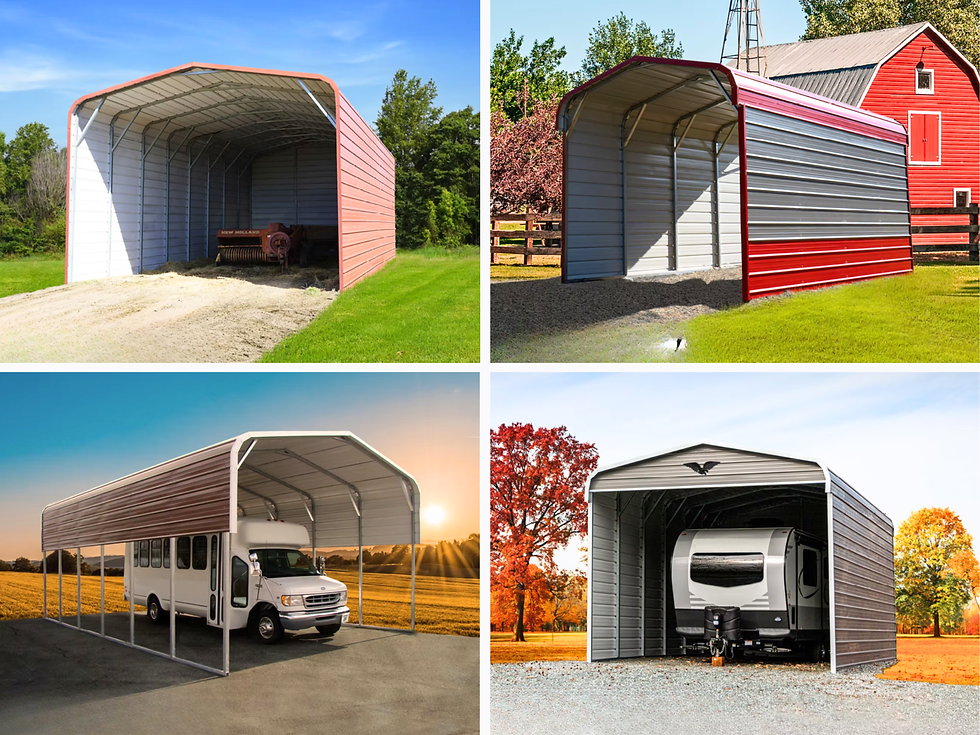
Because of its simple design and reduced material requirements, the regular roof is typically the most budget-friendly option, making it an ideal choice for homeowners seeking reliable protection without added cost.
Boxed Eave
The boxed eave roof features a clean, A-frame design that closely resembles the look of a traditional residential roof. Compared to a regular roof, it offers improved water control by directing runoff more efficiently away from the structure.

This style is a popular choice for homeowners who want a more polished appearance with better performance in moderate rain and weather conditions.
Vertical Roof (Recommended for Heavy Rain/Snow)
A vertical roof is the most durable and weather-resistant carport roof style available. Its vertical metal panels allow rain, snow, and debris to slide off quickly, providing superior runoff and reducing buildup on the roof.

This design makes vertical roofs ideal for regions with heavy rainfall, snowfall, or harsh weather, offering long-term performance and added protection compared to other roof styles.
How Much Does a Metal Carport Cost?
The cost of a metal carport can vary quite a bit, simply because no two builds are the same. Pricing isn’t based on a one-size-fits-all model; it depends on details like size, roof style, site conditions, and any custom features you choose. That flexibility is what makes metal carports appealing, allowing homeowners and businesses to find an option that fits their needs without stretching their budget.
Key pricing factors include:
Size: The width, length, and height of a metal carport have a direct impact on overall cost. Larger footprints require more steel and roofing materials, while added height or extra clearance for RVs, campers, or equipment increases structural requirements to maintain strength and stability.
Roof style: Regular, boxed eave, and vertical roof styles vary in cost due to differences in design, materials, and performance. Regular roofs are typically the most budget-friendly. Vertical roofs are usually the highest-priced option, offering superior runoff, durability, and performance in heavy rain or snow.
Level of enclosure: Fully open carports are generally the most affordable option, offering overhead protection with minimal materials and labor. Partially enclosed designs, such as adding side panels or end walls, increase protection from wind, rain, and sun while raising costs slightly. Fully enclosed carports require additional framing, panels, and installation time, making them the most expensive option but also the most garage-like in terms of protection and functionality.
Anchoring and surface type: The surface your carport sits on has a big impact on both stability and overall cost. Ground installations usually rely on earth or mobile-home–style anchors driven into the soil, while concrete or asphalt surfaces require specialized anchors designed for those materials. Each option comes with different labor, equipment, and hardware needs, which can affect the final price.
Just as important, proper anchoring isn’t optional. It plays a key role in meeting local building requirements and making sure your carport stays secure during high winds or severe weather.
Upgrades and options: Optional upgrades like custom colors, trim packages, wainscoting, doors, windows, and insulation can raise the overall cost of a metal carport. However, these additions often add real value, improving durability, increasing comfort and usability, and helping the structure blend seamlessly with your home or property.
Because every property and use case is different, the best way to estimate cost is to match these factors to how you plan to use your metal carport and the level of protection you need.
Sizing Guide (So You Don’t Buy the Wrong One)
Choosing the right carport size is one of the most important decisions you’ll make. A carport that’s too small can limit access and usability, while an oversized structure may add unnecessary cost. Proper sizing ensures your vehicles and equipment fit comfortably now and in the future.

Start by measuring your vehicle’s overall width, including mirrors, and allow extra space for door swing clearance so you can enter and exit easily. Height is equally important, especially for trucks, campers, or RVs; be sure to account for roof racks, antennas, or accessories. Length should provide enough room to fully cover the vehicle with additional space at the front and rear.
Common sizing guidelines include:
Single-car carports: Designed to cover one vehicle comfortably, single-car carports provide enough width for mirror clearance and door swing space, along with sufficient length and height to protect the vehicle without feeling cramped.
Two-car carports: Wider structures designed to shelter two vehicles side by side, two-car carports provide added space between vehicles for easier access, door clearance, and everyday convenience.
RV covers: Built with extra length and increased height clearance, RV covers are designed to accommodate larger vehicles such as motorhomes, campers, and trailers, ensuring proper coverage and safe clearance for rooftop accessories.
No matter the application, it’s always best to measure carefully and include buffer room on all sides. A little extra space improves ease of use, allows for future vehicle upgrades, and helps you avoid the cost of replacing a carport that’s too small.
Permits and Codes (What Most People Get Wrong)
Permit requirements for metal carports can vary widely from one city or county to the next. They usually depend on things like the size of the structure, where it’s placed, and whether it’s considered permanent. This is where many homeowners get caught off guard, assuming a carport doesn’t need approval simply because it isn’t fully enclosed.

In many areas, local regulations take effect once a structure exceeds certain size limits, and those thresholds can vary significantly by location. Larger carports, taller designs, or installations on concrete foundations are more likely to require permits than smaller, ground-anchored setups.
Before moving forward, it’s always a good idea to check with your local building or zoning department to confirm what’s required in your area. If your home is part of an HOA, be sure to review their guidelines as well. HOA rules are separate from city or county codes and can affect everything from placement to appearance.
A quick checklist to review before installation includes:
Setbacks: Required distances from property lines, neighboring structures, and easements to ensure zoning compliance
Height limits: Maximum roof or peak height allowed by local ordinances, which may vary by location and structure type
Snow and wind load requirements: Structural ratings based on regional climate conditions to ensure safety and code compliance
Anchoring requirements: Approved anchoring methods based on installation surface, such as ground, concrete, or asphalt, to meet local and manufacturer standards
For added clarity and credibility, carports are commonly defined under recognized building standards as structures that are “open on not less than two sides,” a distinction outlined by ICC Digital Codes. Understanding this definition can help explain why carports are often regulated differently from fully enclosed garages.
Taking the time to verify permits and codes upfront can save you from costly delays, compliance issues, or having to modify your carport after installation.
Installation Basics (What to Expect)
Understanding how the installation process works helps set clear expectations and ensures your metal carport is installed properly from the start. While the exact steps may vary based on your site and the type of structure you choose, most carport installations follow a straightforward and predictable process.
Site leveling:
Installation begins with preparing a level site. A flat, stable surface is critical for proper alignment, structural integrity, and long-term performance. This may involve grading soil or confirming that a concrete or asphalt pad is level.
Anchor choice by surface:
The anchoring method is determined by the installation surface, whether ground, concrete, or asphalt. Using the correct anchors is critical for structural stability, wind resistance, and compliance with local building codes.
Delivery and assembly:
Once the site is ready, materials are delivered, and the carport is assembled on-site. Steel framing is erected first, followed by roof panels and any optional sides or upgrades. Most installations are completed quickly compared to traditional construction.
Final inspection and stability check:
After assembly, the structure is checked for proper anchoring, alignment, and overall stability. This final review ensures the carport is secure, safe, and ready for use.
Choosing the Right Metal Carport (Quick Decision Checklist)

With so many options available, choosing the right metal carport comes down to a few key decisions. Asking the right questions upfront can help you avoid common mistakes and ensure your carport fits your needs now and in the future.
What are you covering? Identify what you need to protect, whether it’s a single car, multiple vehicles, an RV, a boat, trailers, or equipment. Larger vehicles and specialty items often require additional width, length, and height clearance, along with stronger structural support, which directly influences the carport’s size, design, and overall build specifications.
What weather matters most? Evaluate your local climate, including factors like heavy rainfall, snowfall, high winds, or intense sun exposure. These conditions play a key role in choosing the right roof style, panel orientation, anchoring system, and overall structural strength needed for long-term performance.
Do you want a future enclosure? If you plan to add side panels, end walls, or doors later, select a carport design that supports easy upgrades. Planning ahead can save time and money while allowing your structure to adapt to changing needs.
What’s your installation surface? Determine whether the carport will be installed on ground, concrete, or asphalt, as the surface type directly impacts anchoring requirements, installation methods, and overall cost.
Are permits or HOA restrictions likely? Review local building codes and any HOA guidelines early in the process to confirm permit requirements, placement rules, and design restrictions, helping you avoid delays, fines, or required changes after installation.
This quick checklist helps narrow your options and ensures your metal carport is both functional and code-compliant.
FAQs
Below are some of the most common questions homeowners ask when considering a metal carport. These concise answers are designed to be helpful, easy to scan, and applicable across most locations:
Do I need a permit for a metal carport?
Permit requirements vary by city and county and often depend on the carport’s size, height, location, and whether it’s considered permanent. Always check with your local building or zoning department before installation.
What’s the best roof style for snow or heavy rain?
A vertical roof is generally the best option for areas with heavy rain or snow because its panel orientation allows water, snow, and debris to shed more efficiently.
What size carport do I need for an SUV or RV?
SUVs typically need added width and height compared to standard cars, while RVs require extra length and significant height clearance. Measuring your vehicle and adding buffer space is the best way to determine the right size.
Can I enclose a carport later?
Yes, many metal carports are designed to allow future enclosure. If you plan to add walls or doors later, choose a design that supports easy upgrades from the start.
Can a carport be installed on gravel, asphalt, or concrete?
Yes. Metal carports can be installed on ground, gravel, asphalt, or concrete, but each surface requires a specific anchoring method to ensure stability and code compliance.
How long does installation take?
Once the site is prepared, most metal carports are delivered and assembled in a short timeframe, often within a day, depending on size, design, and site conditions.
Ready to Get Started?
Our team will help you determine the right size, select the best options for your needs, and, where possible, guide local permit requirements to help ensure a smooth installation process.

Permit requirements vary by city and county, and are often based on factors like size, location, and whether the carport is considered a permanent structure. Checking with your local building or zoning department is the best way to confirm what’s required in your area.


Comments